Smart Grid Simulation for EV Integration – From Concept to European Scale
Ford: The challenge
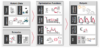
FEV and Ford have collaborated to create a comprehensive smart grid simulation framework that optimizes energy flows for electric vehicle (EV) charging, stationary batteries, and photovoltaic (PV) systems. This solution combines advanced algorithms, real-world data, and predictive modeling to enable cost-efficient, sustainable, and grid-friendly charging strategies for both households and fleets.
The rise of electric mobility introduces complex challenges:
- Grid Stability: Balancing fluctuating renewable generation with dynamic EV charging demand.
- Cost Efficiency: Minimizing energy costs under flexible tariffs and peak power constraints.
- Scalability: Designing solutions that work for single depots and across multiple European countries.
FEV e+r: Our involvement and solution
FEV developed an integrated simulation environment that combines:
- Energy Management System (EMS): Optimized energy flow between PV, stationary batteries, and multiple EVs.
- Smart Charging Strategies: Including unidirectional (V1G) and bidirectional (V2G) charging for cost reduction and grid services.
- High-Resolution Simulation: Time step reduced to 1 minute for detailed analysis.
- European Data Integration: Weather, tariff, and synthetic load profiles for 7 countries (Germany, UK, Norway, France, Spain, Italy, Netherlands) over 3 years (2019–2021).
- Market Participation: Support for balancing markets (FCR, aFRR) to generate additional revenue.
- Design of Experiments (DOE): Component sizing for PV, battery, and grid connection points.
Key Outcomes:
- Significant energy cost savings under dynamic tariffs.
- Peak shaving and load shifting reduce grid stress and costs.
- PV integration can cut energy costs by up to one-third.
- V2G strategies enable participation in balancing markets, reducing CO₂ emissions and improving grid flexibility.
Get in touch with us through our Contact form
Ähnliche Beiträge
FEV and Regout Group Collaborate on Smart Energy Management through PV–BESS Integration
The Regout Group, a leading industrial manufacturer in Maastricht, aims to enhance sustainability and reduce energy costs. With rising electricity prices and the need for greener operations, the challenge was to identify an optimal mix of renewable energy generation and…
Global diesel & natural gas power generation study
Global industrial engine manufacturer seeks tounderstand the diesel and natural gas power generation marketto evaluate further engine development.
Data center energy efficiency improvement study
Silo-ed operation of all DC systems and reactive control strategies were leading to inefficient power consumption. Help identify and implement energy efficiency improvement measures.