Select another language to see content for your location.

Electrolyzer Testing
Validate performance. Understand degradation. Accelerate development.

FEV supports electrolyzer developers, component suppliers, and system manufacturers with comprehensive testing and validation capabilities, from electrochemical characterization at MEA and cell level to stack, component, and complete system testing.

Our approach goes beyond measuring performance. We combine advanced testing, electrochemical diagnostics, automated data acquisition, and engineering expertise to identify performance limitations, understand degradation behavior, and translate test results into concrete development measures.

integrated system performance
Testing the complete electrolyzer chain

Electrolyzer performance is determined by the interaction of materials, electrochemical components, stack design, balance-of-plant, controls, and operating strategy.

FEV combines testing across different integration levels to create a consistent understanding of the complete electrolyzer.
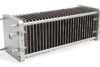
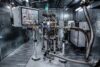
MEA, Cell, Short-Stack & Full-Stack Testing

Detailed electrochemical characterization enables developers to understand performance and degradation at their origin.

Typical testing activities include:

  • Polarization and performance characterization
  • Electrochemical impedance spectroscopy (EIS)
  • Cyclic and linear sweep voltammetry (CSV & LSV)
  • Gas crossover and permeation analysis (H2-in-O2 & O2-in-H2)
  • Process water and electrolyte characterization
  • Component and material benchmarking
  • Long-term durability testing

Balance of Plant, Balance of Stack & Component Testing

Electrolyzer performance depends strongly on the interaction between the stack and its surrounding subsystems. FEV provides modular test environments for the characterization and validation of balance-of-plant, balance-of-system, and individual components.

Testing can address:

  • Thermal management
  • Fluid and gas supply systems
  • Pumps, valves, and heat exchangers
  • Gas treatment and separation
  • Power electronics
  • Control functionality
  • Component durability
  • Subsystem interaction

Electrolyzer System Integration & Testing

At system level, electrochemical performance interacts with auxiliaries, controls, power electronics, thermal management, water treatment, gas processing, and operating strategy. FEV supports integrated system testing from functional validation to application-oriented operation.

System testing can include:

  • System efficiency and energy consumption
  • Part-load and dynamic operation
  • Load-following capability
  • Start-up and shutdown behavior
  • Thermal management
  • Hydrogen quality
  • Control strategy validation
  • Safety and fault-response testing
  • Long-term monitoring
  • Application-specific operating profiles

Advanced electrochemical characterization: Reveal, understand & optimize performance

A polarization curve provides an important measure of overall performance. Understanding why performance changes requires deeper diagnostic information.

FEV combines complementary electrochemical methods to distinguish relevant performance contributions and support targeted optimization.

Performance Characterization

Current-voltage behavior is characterized across defined operating conditions to evaluate:
  • Electrochemical performance
  • Efficiency
  • Operating window
  • Temperature and pressure effects
  • Performance differences between designs
The resulting baseline provides the foundation for subsequent diagnostic and durability investigations.


Durability & Degradation Testing
Understand how performance changes over time

Lifetime and degradation strongly influence electrolyzer performance, availability, maintenance requirements, and economic competitiveness.
FEV combines durability testing with recurring electrochemical diagnostics to quantify performance evolution and investigate potential degradation mechanisms.
A typical methodology can combine
  • Baseline characterization

    Initial electrochemical and operational characterization establishes the reference state.

  • Controlled aging

    The cell, stack, component, or system is operated under defined steady-state, cyclic, dynamic, or accelerated conditions.

  • Periodic diagnostics

    Performance measurements, EIS, and complementary diagnostics track changes during operation.

  • Degradation analysis

    Changes in electrochemical and operational behavior are evaluated to identify dominant trends and potential root causes.

  • Engineering optimization

    Insights are translated into component, operating strategy, control, or system design recommendations.

Testing under real-world operating conditions

Future electrolyzer applications increasingly require flexible interaction with renewable generation, electricity markets, industrial processes, and energy systems.

Application-specific testing can therefore reproduce representative operating conditions such as:

  • Renewable energy profiles
  • Dynamic load changes
  • Partial-load operation
  • Frequent start-stop events
  • Standby periods
  • Power limitations
  • Customer-specific duty cycles
  • System-specific operating strategies

This allows the interaction between performance, efficiency, flexibility, and durability to be investigated under representative operating conditions.

From test data to engineering decisions

FEV combines testing with electrochemistry, simulation, controls, system engineering, and data analytics.

Development of targeted testing programs based on technical objectives, critical parameters, and development maturity.

Automated test sequences and structured data acquisition enable repeatable characterization and efficient long-term testing.

High-resolution measurement data is evaluated to identify performance trends, correlations, anomalies, and degradation signatures.

Experimental data can provide the basis for empirical, physics-based, or physics-empirical degradation models.

Electrochemical diagnostics and system data can be combined to investigate potential origins of performance losses or abnormal behavior.

Testing results can be translated into recommendations for materials, components, stack architecture, system design, operating strategies, and controls.

From ExploraTION TO Validation: Supporting the electrolyzer development cycle

  • Technology Exploration

    Characterize new materials, concepts, and technologies.

  • Cell & Stack Validation

    Assess and validate cell and stack performance, durability, scalability, and consistency.

  • Component Validation

    Characterize BoP and BoS components under representative conditions.

  • System Validation

    Assess integrated performance, controls, efficiency, and operational behavior.

  • Application Validation

    Test representative operating profiles and real-world duty cycles.

  • Industrialization

    Translate validated data into robust product and system improvements.

Generate insights required to develop better electrolyzers: Independent testing. Engineering perspective.

FEV combines electrochemical testing capabilities with mechanical, electrical, controls, simulation, and system engineering expertise.
This multidisciplinary approach enables us to evaluate electrolyzers as integrated technical systems rather than isolated components.
Whether developing a new electrolysis technology, optimizing an existing cell or stack, validating balance-of-plant components, or testing a complete electrolyzer system, the objective remains the same.

FAQ about electrolyzer testing

FEV testing activities include all relevant electrolyzer technologies, i.e. PEM, AEM, AEL and SOEC. Additional technology-specific testing capabilities should be defined depending on the required component, operating conditions, temperature level, and test infrastructure.

Testing can range from MEAs, single cells, and short stacks to balance-of-plant components, subsystems, and integrated electrolyzer systems. The appropriate test level depends on the development objective and technology maturity.

Yes. The described capabilities include long-term operation, cycling, dynamic load profiles, start-stop testing, and recurring performance characterization. Test protocols can be tailored to the targeted degradation mechanisms and intended application.

Yes. EIS can complement conventional current-voltage characterization and provide additional information on electrochemical and transport-related processes. Interpretation can be combined with HFR evaluation and, where applicable, advanced approaches such as Distribution of Relaxation Times.

Application-specific load profiles can be implemented to investigate electrolyzer behavior under dynamic operating conditions representative of renewable power supply, intermittent operation, or customer-specific duty cycles.

Yes. Testing programs can be developed around individual objectives such as performance benchmarking, component selection, operating-window optimization, durability assessment, degradation investigation, or control validation.

Testing data can be combined with electrochemical diagnostics, operating data, and engineering analysis to investigate potential causes of performance degradation. Depending on the issue, additional component or material analysis may be required.

Yes. Structured experimental data can support model parameterization, calibration, and validation. This can include performance models as well as empirical, physics-based, or physics-empirical degradation approaches.

The intended value proposition extends beyond measurement. Testing results can be linked with FEV’s component, stack, controls, simulation, and system engineering activities to derive potential optimization measures for product design and operation.

A testing project would typically begin by defining the development objective, test article, operating envelope, relevant KPIs, measurement requirements, test matrix, and acceptance criteria. Based on these inputs, an appropriate test and evaluation methodology can be developed.

Start a technical discussion: Let’s discuss your testing challenge

Explore how degradation models can support lifetime assessment, material selection, cell design, testing, or operating-strategy development.