Select another language to see content for your location.
FEV_Header_AI_BESS
FEV_Header_AI_BESS

Battery Energy Storage Systems (BESS): Engineering, testing & integration for BESS

FEV is involved in battery energy storage system market and use-case analysis to system development, testing, integration and commissioning. Manufacturers, system integrators, project developers receive technical concepts, system specifications, validated designs, cost assessments, test plans and implementation support for utility-scale, industrial and residential storage applications. Investors are supported with in-depth BESS asset analysis and optimization of operating strategies and degradation profiles, powered by FEV’s advanced simulation tools.

Battery Energy Storage Systems:

What makes a BESS project successful?

Battery Energy Storage System (BESS) must balance technical performance, safety, lifetime and cost. The optimal system depends on the intended use case, load and generation profiles, market participation, grid requirements, local regulation and the expected operating strategy.

These dependencies affect fundamental decisions such as system size, cell technology, thermal management, power conversion, control strategy and supplier selection. They also determine whether the system can deliver the required performance throughout its planned lifetime.

Manufacturers and system integrators face additional pressure from falling system prices, international competition and complex supply chains. Project developers and operators need reliable technical information before selecting suppliers, approving designs or commissioning a system. FEV addresses these challenges by combining battery development, benchmarking, simulation, testing and implementation capabilities.


FEV_E+R_Image_AI_Utility

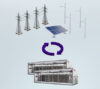
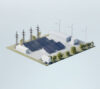
Utility-scale BESS

Large-scale storage systems stabilize power grids, enable the integration of fluctuating renewable generation, and unlock revenues from ancillary services and energy arbitrage.
We design and optimize utility‑scale BESS for high availability, safety and bankable business cases.

FEV_E+R_Image_AI_Industrial

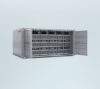
Industrial BESS

Industrial storage systems reduce peak loads, secure critical processes and increase on‑site use of renewable energy such as PV.
We support OEMs with product strategy, develop and benchmark storage systems, and integrate BESS with EMS, on‑site consumption or charging infrastructure to create robust energy hubs.

FEV_E+R_Image_AI_Residential

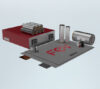
Residential storage

Residential storage makes solar power predictable — increasing self‑consumption, enabling backup power and unlocking smart tariff models.
We support manufacturers from strategy to product development, help to reduce failure rates and test solutions at the world’s largest independent high‑voltage battery development and test center.

What differentiates FEV in battery energy storage?

BESS engineering from components to ecosystems

FEV supports BESS development across four connected levels, from battery components and integrated systems to use-case validation and integration into energy and mobility ecosystems.

Components

Cell, electronics, controls and thermal management development

Systems

System integration, industrialization, localization and testing

Use cases

Simulation, translation into system requirements and testing regimes

Ecosystem

Integration of BESS into energy and mobility ecosystems

FEV battery expertise in numbers

FEV combines extensive battery development experience with cell testing and validation infrastructure to support BESS engineering across the system lifecycle.

  • 0 +
    battery systems benchmarked
  • 0 +
    battery-cell development projects
  • 0 +
    cell-testing channels
  • 0
    climate & temperature chambers at FEV eDLP

Our tools and facilities

  • Cell laboratory

    State‑of‑the‑art cell laboratory for customized battery systems and cells

  • BATT.CODE

    Battery system design tool with interfaces for ecosystem design and system‑level simulation

  • eDLP

    The world’s largest independent high‑voltage battery development and test center

  • BESS database

    Comprehensive database covering more than 250 stationary storage systems from leading manufacturers

  • FEV CycleBat

    Tool for assessing the circularity of different BESS designs and evaluating life-cycle costs, including maintenance, repairs and recycling

  • Build‑up workshop

    Workshop for prototype build‑up and commissioning of prototypes and small series

FEV's battery development and testing center eDLP
FEV's HV battery development and testing center "eDLP"
Test Cells
Test Cells
Battery Lab
Battery Lab

Product Development: How does FEV support BESS engineering?

FEV supports Battery Energy Storage System (BESS) across the product and project lifecycle, from market strategy and system design to testing, commissioning and end-of-life assessment. The service portfolio combines strategic analysis, battery engineering, benchmarking, physical validation and implementation support to address technical, commercial and regulatory decisions.

FEV analyzes storage applications, regional markets, competing technologies, regulatory requirements and relevant grid codes. The results support product strategies, technology roadmaps, business-case development, market entry decisions and the evaluation of possible value-chain positions. The work can include market forecasts, competitor profiles, application assessment, make-or-buy analysis, sourcing strategies, due diligence and an evaluation of financing or subsidy conditions

  • Technology roadmapping
  • Market & competitor analysis
  • Strategies & business cases
  • Regulation & financing
  • M&A and due diligence

FEV compares BESS products, designs, technical performance and cost structures at cell, module and system level. The analyses create a transparent basis for supplier selection, product positioning, procurement decisions and the identification of technical and commercial improvement opportunities. Depending on the project scope, FEV combines design benchmarking, performance testing, system and component teardowns, bill-of-material assessments and bottom-up cost analysis. Target-costing activities connect benchmark findings with design alternatives, supplier information and costed bills of materials to identify and evaluate potential cost reductions.

  • Design benchmarking
  • Cost benchmarking
  • Cost & value management

FEV translates use cases, operating profiles and technical requirements into BESS concepts and system specifications. Simulation supports decisions on system capacity, power rating, cell technology, thermal management, electrical architecture and operating strategy before detailed development begins. The development scope can include battery hardware, electrical and electronic integration, control functions, communication interfaces and software. FEV can also assess the interaction of a BESS with renewable generation, industrial loads, charging infrastructure, energy-management systems and the electricity grid.

  • Use-case simulation & dimensioning
  • Turn-key BESS development
  • E/E integration
  • Software development

FEV develops and performs validation programs for BESS components and systems. Testing can address performance, durability, degradation, environmental loads and safety behavior, as well as requirements arising from grid codes and applicable regulations. The validation approach can combine physical battery testing with simulation, virtual validation and hardware-in-the-loop methods. The results support design verification, component and supplier assessment, operating-strategy development and preparations for system integration and commissioning.

  • Performance, durability & abuse testing
  • Validation of grid codes & regulation

FEV supports the transition from a validated BESS design to a functional prototype or commissioned system. This can include prototype build-up, integration planning, coordination of technical interfaces and support for approval and permitting activities within the agreed project scope. During on-site commissioning, FEV can support the integration of the battery, power conversion system, controls and grid interface. Functional checks and charging and discharging tests help verify that the integrated system operates as specified before handover or further field validation.

  • Prototype build-up
  • Permitting support
  • On-site commissioning

FEV assesses environmental impacts, regulatory requirements and circular-economy options across the BESS lifecycle. The work supports decisions on material selection, design-for-circularity, repairability, repurposing, remanufacturing and recycling. Life-cycle assessments can evaluate environmental impacts across defined lifecycle stages, while circularity and end-of-life analyses compare potential recovery routes and value-chain positions. The results provide technical input for product development, sustainability strategies and compliance planning.

  • Circularity strategies
  • Design-for-circularity
  • Life-cycle-assessments
  • Regulation analyses
FEV_E+R_Image_AI_Residential

Battery Energy Storage Systems benchmarking

FEV compares the technical design, performance characteristics and cost structure of residential Battery Energy Storage Systems. The benchmarking reports examine relevant differences in battery technology, usable capacity, power output, scalability, system integration, solar coupling, certifications, warranty conditions and product architecture.

The results support product development, competitor assessment, supplier evaluation, procurement and target costing. Depending on the scope, FEV combines product specifications with physical testing, teardown analysis, engineering assessment, component costing and a costed bill of materials.

FAQ about BESS

BESS dimensioning starts with the intended use cases and the associated load, generation and operating profiles. FEV models the energy system to assess the required power, energy capacity and operating strategy. The analysis can consider peak shaving, increased self-consumption, dynamic electricity tariffs, charging infrastructure and participation in energy or balancing markets.

A BESS supplier evaluation should consider more than the quoted system price. Relevant criteria include cell and system design, technical performance, durability, safety, controls, interfaces, grid-code compliance, serviceability and expected lifecycle costs. FEV supports supplier comparisons through supplier scouting, design and cost benchmarking, testing, teardown analysis and technical due diligence.

Yes. FEV supports IPPs and project developers with market and competitor analysis, supplier scouting, partnership strategies, due diligence and BESS design and cost benchmarking. The scope can cover battery technology, product and system design, supplier capabilities, cost structures and project-specific technical or regulatory requirements.

FEV combines cell testing, durability testing, aging analysis and simulation models to assess battery degradation. Depending on the project, the results can support decisions on cell selection, thermal management, cycling strategy, capacity reserves and technical assumptions for warranty models.

FEV supports grid-code analysis, integration validation planning, virtual testing, hardware-in-the-loop validation, field testing and on-site commissioning. The validation program is defined according to the target market, applicable grid requirements, BESS architecture, control functions and technical interfaces.

FEV supports the integration of the battery system, power conversion system, control system and grid interface. Commissioning activities can include functional checks and basic charging and discharging tests. Related services include integration planning, grid-code validation and permitting support within the agreed project scope.

Yes. FEV analyzes and supports the integration of BESS with photovoltaic generation, industrial loads, charging infrastructure and energy management systems. Relevant applications include increased self-consumption, peak shaving, dynamic tariffs and local energy systems that combine battery storage with other energy assets.

FEV focuses on BESS engineering, technical consulting, system development, testing, permitting support, integration and commissioning. Services such as land acquisition, complete substation planning, overall construction coordination or acting as an EPC contractor are not presented as standard FEV BESS services. Project-specific responsibilities must therefore be defined individually.

FEV combines product benchmarking, teardown analysis, component costing, target costing, design assessment and supplier analysis. Interdisciplinary workshops identify technical cost-reduction measures and evaluate their implications for product design and performance. The findings can be incorporated into an updated, costed bill of materials.

Case Studies: BESS projects & applications

Selected projects show how FEV supports BESS market analysis, system development, integration, testing and commissioning across different applications.

  • FEV supports BESS investment decisions through BESS Redflag Report and asset simulation

    The challenge Investors and asset owners need to understand both the current condition and the future potential of operating battery energy storage systems. The challenge is to identify technical risks, assess remaining useful life, and evaluate…

  • FEV and Regout Group Collaborate on Smart Energy Management through PV–BESS Integration

    The Regout Group, a leading industrial manufacturer in Maastricht, aims to enhance sustainability and reduce energy costs. With rising electricity prices and the need for greener operations, the challenge was to identify an optimal mix of renewable energy generation and…

  • Reference ESS FMEA project

    Support and assessment for European ESS Integrator to meet certification criteria by performing FMEA/PFMEA and risk analysis…

  • Modular battery concept for off-road machinery and stationery energy storage system

    Client is considering to become a battery ack supplier for off-road machinery & stationary ESS and needs support defining the battery concent & business case…

  • Battery energy storage systems: Development, installation, and commissioning of 2nd life systems

    Development and assembly of B2L energy storage systems (30 to 5.000 kWh) with different OEM modules…

Expertise: Our BESS team

Tobias Klerks

Solution Leader BESS

Kilian Sagner

Solution Leader BESS

Dr. Thorsten Plum

Business Development BESS

Contact: Get in touch with us