Select another language to see content for your location.

PEM, Solide Oxide & Phosphoric Acid Fuel Cells: Clean, silent and flexible power generation.

FEV is an independent engineering, simulation, testing and technical consulting partner for fuel cell projects. We support fuel cell OEMs, project developers, utilities and investors across the entire value chain — from technology assessment and system engineering to integration, commissioning and lifecycle optimization.

Breadcrumb navigation

h2 to powerStationary fuel cells for resilient energy supply

For more than 25 years, FEV has been developing fuel cell solutions, combining an understanding of the technical challenges with practical engineering expertise.

In stationary applications, fuel cells can provide efficient, flexible and locally low-emission power and heat. They support security of supply where resilience, decarbonization and system stability must be addressed together.

Different fuel cell technologies meet different project requirements. PEM fuel cells efficiently convert hydrogen into electricity and can follow demanding load profiles, while PAFC systems have demonstrated robustness in stationary applications. HT-PEM and SOFC systems offer greater fuel flexibility, including the use of methane, methanol or ammonia. SOC-based systems can also operate reversibly in fuel cell and electrolysis mode.

Fuel cell system design and modelling

FEV develops application-specific concepts from stack level to system architectures. The existing service portfolio includes use-case simulation, system dimensioning, degradation modelling, lifetime prediction and turn-key system development.

The scope can include:
requirements and system architecture, use-case simulation and dimensioning, energy and media-flow modelling, operating and control strategies, balance-of-plant component matching, degradation and lifetime modelling

Modern fuel cell stack with key components for efficient hydrogen-powered electricity generation.

Fuel cell and stack development

FEV energy + resources offers comprehensive expertise in fuel cell development, from CCM, MEA and GDL qualification and single-cell testing to stack and complete system development. We support our clients throughout concept development, design, testing and optimization to achieve high efficiency, long lifetime and cost-effective solutions that perform both technically and commercially.

Beyond individual cell and stack development, FEV develops complete fuel cell systems and application-specific system architectures. Cell testing provides a basis for evaluating material combinations and transferring validated concepts to stack and system level. The result is a fuel cell system designed around real operating conditions and project requirements.

Balance-of-plant component engineering and testing

A fuel cell power plant is more than the stack. Air supply, hydrogen supply and recirculation, thermal management, power electronics, controls and safety functions must operate as an integrated system.

FEV energy + resources offers engineering and testing services for electric compressors and turbochargers, hydrogen recirculation blowers, jet pumps and other components like valves, injectors or ejectors.

From single cell testing up to MW system tests.

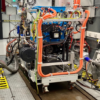
Comprehensive testing is a critical step in fuel cell development to ensure performance, reliability and safety. FEV energy + resources operates state‑of‑the‑art test facilities and methodologies to validate fuel cell stacks and systems under realistic operating conditions.
We complement physical testing with detailed virtual models, enabling shorter development cycles, early issue detection and reduced risk during scale‑up and operation.

Battery testing
Battery testing

Fuel cell system testing capabilities in numbers

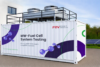
FEV combines system-level testing with simulation and engineering expertise. The test facilities support continuous operation, electrical power of >500 kW and hydrogen inlet pressures of up to 60 bar(a), enabling the validation of performance, control strategies and system durability.

  • 0 hrs &
  • 0 days
    operation
  • 0+ kw
    electric power
  • 0 bar
    H2 inlet pressure (up to)

Fuel cell testing and validation

FEV tests fuel cell components, stacks and systems under defined operating conditions. Physical testing can be combined with virtual models to support development, validation and the assessment of degradation

Our service portfolio lists:

  • Performance, durability and abuse testing
  • Accelerated stress test development
  • Design validation plan development
  • Cell-to-system testing
  • Balance-of-plant component testing
  • Safety and failure analyses
  • Certification support

360° fuel cell solutions: Holistic, precise, and execution‑ready

With our modular 360° approach, we support clients across the entire development journey — from early prototypes to series production. Deep engineering expertise, system‑level thinking and hands‑on consulting are combined into scalable, technology‑open solutions tailored to individual project needs.

Degradation and lifetime assessment

Fuel cell lifetime depends on interaction between materials, operating conditions and system architecture. FEV combines degradation modelling, accelerated stress testing and validation programs to predict aging effects, improve durability and reduce lifecycle costs.

For demanding use cases such as data centers, continuous energy supply is key. Hydrogen generated from natural gas, methane, methanol or ammonia can challenge your fuel cell durability by contaminants like sulfur, carbon monoxide (CO) and other species. FEV supports you on defining the right trade-off between reformate quality, durability and costs.

Explore our data center solutions

Service portfolio: Our offering

  • Technology roadmapping 
  • Market & competitor analysis 
  • Site selection & infrastructure assessment 
  • Strategies & business cases 
  • Regulation & financing 
  • M&A and due diligence 
  • Design benchmarking 
  • Cost benchmarking 
  • Cost & value management 
  • Supply chain management 
  • Use-case simulation & system dimensioning 
  • Degradation modeling, analyses & lifetime prediction 
  • Turn-key system development 
  • Process development & integration 
  • Electrical integration 
  • Mechanical integration 
  • Software development & controller implementation 
  • Cell & stack development 
  • Hydrogen Safety, Functional Safety & Cyber Security 
  • Performance, durability & abuse testing 
  • Accelerated Stress Test (AST) development 
  • Design Validation Plan (DVP) development 
  • Cell to System testing 
  • Balance of Plant (BoP) component testing 
  • Safety & failure analysis (FMEA, FTA, HAZOP, HARA) 
  • Certification support (CE, ATEX, PED, ISO 22734)
  • Prototype build-up 
  • Permitting support 
  • Project management 
  • On-site commissioning
  • Circularity strategies 
  • Design-for-circularity 
  • Life-cycle-assessments 
  • Regulation analyses 
  • Fuel cell aging simulation and prediction
  • Trouble shooting & field-fixing with second opinion 
  • Operational optimization & efficiency enhancements 
  • Spare parts management & lifecycle planning 

Case Studies: Examples

  • From Water Quality to Cell Integrity: A Comprehensive PEM Stack Forensics Study

    An industrial customer sought an independent second opinion on purchased and stored PEM electrolyzer stacks prior to installation in its electrolysis systems...

  • Copper end‑of‑life recovery pathways in data center infrastructure

    Data center growth creates large volumes of end‑of‑life copper FEV was asked to analyze recycling pathways to identify levers to improve copper preservation and circularity…

  • FEV supports BESS investment decisions through BESS Redflag Report and asset simulation

    The challenge Investors and asset owners need to understand both the current condition and the future potential of operating battery energy storage systems. The challenge is to identify technical risks, assess remaining useful life, and evaluate…

  • FEV and Regout Group Collaborate on Smart Energy Management through PV–BESS Integration

    The Regout Group, a leading industrial manufacturer in Maastricht, aims to enhance sustainability and reduce energy costs. With rising electricity prices and the need for greener operations, the challenge was to identify an optimal mix of renewable energy generation and…

  • Reference ESS FMEA project

    Support and assessment for European ESS Integrator to meet certification criteria by performing FMEA/PFMEA and risk analysis…

  • Technical and commercial due diligence of a large scale electrolyzer project with SOP before 2028

    The client had the opportunity to invest in a large-scale green hydrogen project in Europe and asked FEV to conduct the technical and commercial due diligence…

  • Modular battery concept for off-road machinery and stationery energy storage system

    Client is considering to become a battery ack supplier for off-road machinery & stationary ESS and needs support defining the battery concent & business case…

  • Battery energy storage systems: Development, installation, and commissioning of 2nd life systems

    Development and assembly of B2L energy storage systems (30 to 5.000 kWh) with different OEM modules…

  • Simulative assessment of performance and competitiveness of novel PEM Electrolyzer membrane

    Gore developed a novel membrane technology for PEM Electrolysis FEV was asked to assess the market potential of their technology…

FAQ about fuel cell systems

There is no universally suitable fuel cell technology. The selection depends on the application, fuel, load profile, dynamic requirements, heat utilization, integration constraints and service-life targets. FEV compares PEM, LT-PEM, HT-PEM, PAFC and SOFC technologies against project-specific requirements.

A technology assessment can compare relevant fuel cell technologies, system concepts, technical risks and integration requirements. The precise FEV deliverables and the inclusion of economic evaluation must still be confirmed with the technical team. The practical assessment typically starts with CCM, GDL and MEA qualification in single cell testing.

System integration can include the stack, air and hydrogen supply, electric turbocharger (eTC), recirculation, thermal management, power electronics, controls and safety systems. The components must be designed and validated as an integrated system.

The current FEV service portfolio includes use-case simulation, system dimensioning, degradation modelling and lifetime prediction. The final page should explain the required input data and typical outputs in more detail. FEV’s modeling capabilities range from 0D and 1D approaches up to detailed 3D multiphysics simulation models. The right model fidelity is chosen based on the given engineering challenge.

The documented testing portfolio covers performance, durability, environmental and abuse testing, accelerated stress tests, cell-to-system testing and balance-of-plant component testing. The specific test setup depends on the technology and development objective.

The current portfolio names certification support concerning CE, ATEX, PED and ISO 22734. The technical team must confirm which of these are directly applicable to the fuel cell scope and how FEV’s role should be described.

FEV combines degradation modelling, accelerated stress testing and validation programs to assess ageing effects. The technical team should provide a concrete example showing the available inputs, outputs and level of validation.

The working proposition is that FEV evaluates technologies and system approaches independently. This differentiation is strategically important but requires explicit technical and legal approval before publication.

Contact: Get in touch with us