
Select another language to see content for your location.

Working together toward the climate‑neutral heat supply of the future

FEV e+r supports municipalities in developing a secure, affordable, and climate‑neutral heat supply – data‑driven, compliant with legislation, and future‑proof.

heat planning: Legally defined processes

Municipal heat planning is the strategic roadmap for a climate‑neutral heat supply by no later than 2045. It shows how buildings can be heated efficiently, using renewable energy, and in a socially responsible manner in the future. FEV e+r supports municipalities across Germany in developing these heat plans.

Heat planning follows a legally defined process. FEV implements this efficiently, digitally, and in close collaboration with all relevant stakeholders and the public. The five steps at a glance:

  • 01 Inventory analysis

    Analysis of buildings, heat demand, infrastructure, and energy consumption

  • 02 Potential analysis

    Identification of renewable heat sources, efficiency potential, and savings options

  • 03 Suitability assessment

    Technical, economic, and spatial assessment of heating networks and alternatives

  • 04 Measures and strategies

    Development of target pathways, cost estimates, and implementation strategy

  • 05 Heat plan and implementation

    Integration of all results into a legally compliant heat plan, including timeline and priorities

With innovative methods, faster to the heat plan


While conventional heat planning often takes many months, we use digital methods and automated analyses to significantly accelerate the process. Our digital twin enables rapid, precise, and reproducible inventory and potential analyses – without compromising on quality, transparency, or legal compliance.

Digital twin as the technological foundation for heat planning


Based on publicly available input data across Germany, we create a digital twin of the municipality. Transient simulation – taking into account hourly varying weather and environmental boundary conditions – enables realistic heat demand profiles, grid loads, and scenarios. This makes planning robust and future‑proof.

  • 01 Input data

    Costs, year of construction, geometry, weather, usage, etc.

  • 02 Digital twin

    Usage, condition, building data, weather, industry, simulation

  • 03 Analysis

    Costs, energy consumption, heat demand, CO₂ emissions, etc.

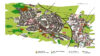
exemplary: Results at a glance


Heizbedarf nach DIN EN 12812 in Baublöcken aggregiert
Prozentuale Deckung des Heizwärmebedarfs durch die Nutzung von Geothermie
Auf Grundlage des berechneten Heizwärmebedarfs erfolgt eine Klassifizierung zur Wärmenetzeignung
  • 0%
    Automated data preparation through the digital twin
  • 0
    Heat planning completed months faster compared to the conventional approach
  • 0%
    Cost savings through digital planning and simulation
  • 0 Mio
    Data points feed into the transient simulation
  • 0%
    Agreement between simulated and real energy consumption

Case studies: Examples

  • FEV and Regout Group Collaborate on Smart Energy Management through PV–BESS Integration

    The Regout Group, a leading industrial manufacturer in Maastricht, aims to enhance sustainability and reduce energy costs. With rising electricity prices and the need for greener operations, the challenge was to identify an optimal mix of renewable energy generation and…

  • Global diesel & natural gas power generation study

    Global industrial engine manufacturer seeks tounderstand the diesel and natural gas power generation marketto evaluate further engine development.

  • Data center energy efficiency improvement study

    Silo-ed operation of all DC systems and reactive control strategies were leading to inefficient power consumption. Help identify and implement energy efficiency improvement measures.

  • Smart Grid Simulation for EV Integration – From Concept to European Scale

    FEV and Ford have collaborated to create a comprehensive smart grid simulation framework that optimizes energy flows for electric vehicle (EV) charging, stationary batteries, and photovoltaic (PV) systems. This solution combines advanced algorithms, real-world data, and predictive modeling to enable…

  • New product opportunity identification within the thermal solutions space for data centers

    Automotive client has a large portfolio and in-depth knowledge of thermal solutions. Investigate the opportunities for the client to enter the data center space with new offerings…

contact: Get in touch with us