Select another language to see content for your location.

PEM, AEM, AEL, SOEC & PCCEL electrolyzers: Engineering electrolysis from cell to system

FEV is an independent engineering, simulation, testing and technical consulting partner for water electrolysis projects. We support electrolyzer OEMs, project developers, utilities and investors across the entire value chain — from technology assessment and system engineering to integration, commissioning and lifecycle optimization.

Breadcrumb navigation

Enabling green H2 through PEM, AEM, AEL, SOEC & PCCEL: The key to industrial decarbonisation

Water electrolysis uses electricity to produce hydrogen from water and is a key technology for industrial decarbonization. When powered by renewable energy, electrolysis enables low-carbon hydrogen production for chemicals, steel, transportation, energy storage and sustainable fuels.

The foundation of green hydrogen production

Water electrolysis converts renewable electricity into hydrogen and is a key technology for industrial decarbonization. It enables the production of green hydrogen for chemicals, steel, transportation, energy storage and sustainable fuels.
Cells

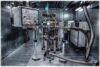
Electrochemical cell development determines the costs, efficiency, durability and hydrogen production performance of an electrolyzer. FEV develops, simulates and tests electrochemical cells, from material concepts and current-density distribution to degradation modelling and long-term validation.

Stack

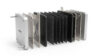
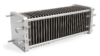
Electrolyzer stacks convert electrochemical reactions into scalable hydrogen production. FEV optimizes stack architecture, clamping system, media distribution and thermal management to improve efficiency, durability and hydrogen output under real-world operating conditions.

System

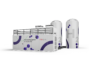
Electrolyzer system integration combines stacks, Balance-of-Plant components, thermal management, controls, safety functions and grid interfaces into a complete hydrogen production system optimized for efficiency, lifetime and operational reliability.

Lifetime

Electrolyzer lifetime depends on the interaction between materials, operating conditions and system architecture. FEV combines degradation modelling, accelerated stress testing and validation programs to predict aging effects, improve durability and reduce lifecycle costs.

360° Electrolysis-solutions: What are 360° Electrolysis Solutions?

360° Electrolysis Solutions describes FEV’s integrated approach to electrolyzer development and deployment. Our expertise spans technology strategy, business case development, cell and stack engineering, Balance-of-Plant design, system integration, testing, validation, commissioning, lifecycle optimization and technical due diligence. This enables customers to manage technical, commercial and operational challenges through a single engineering and consulting partner.

Start an electrolyzer engineering assessment

Balance-of-Plant engineering (BoP)

FEV supports Balance-of-Plant engineering for electrolyzer systems, including water management, gas handling, thermal management, electrical integration, controls, safety systems and grid interfaces. We use simulation and system dimensioning to evaluate efficiency, dynamic operating behavior, degradation impact, component sizing, safety risks and Levelized Costs of Hydrogen (LCOH).

Service Portfolio: Our offering

FEV supports electrolyzer manufacturers, investors, utilities and project developers with technology roadmapping, market assessments, site selection studies and business case development. By combining technical expertise with market intelligence, we help customers identify growth opportunities, assess project feasibility and define sustainable commercialization strategies.

  • Technology roadmapping 
  • Market & competitor analysis 
  • Site selection & infrastructure assessment 
  • Strategies & business cases 
  • Regulation & financing 
  • M&A and due diligence 

FEV provides technology, cost and value benchmarking across electrolyzer components, systems and competing solutions. Benchmarking activities help customers understand market positioning, identify cost reduction opportunities and establish realistic performance and cost targets for future product generations.

  • Design benchmarking 
  • Cost benchmarking 
  • Cost & value management 
  • Supply chain management 

FEV supports electrolyzer development from early feasibility studies to fully integrated hydrogen production systems. Our expertise includes system simulation, degradation modelling, electrical and mechanical integration, controller development, cell and stack engineering, as well as hydrogen safety and cybersecurity.

  • Use-case simulation & system dimensioning 
  • Degradation modeling, analyses & lifetime prediction 
  • Turn-key system development 
  • Process development & integration 
  • Electrical integration 
  • Mechanical integration 
  • Software development & controller implementation 
  • Cell & stack development 
  • Hydrogen Safety, Functional Safety & Cyber Security 

FEV verifies electrolyzer performance, durability, safety and reliability through comprehensive testing and validation programs. Our capabilities range from cell and stack characterization to complete system validation, including accelerated stress testing, certification support and Balance-of-Plant component testing.

  • Performance, durability & abuse testing
  • Accelerated Stress Test (AST) development
  • Design Validation Plan (DVP) development
  • Cell to System testing
  • Special Measurements & Optical investigations
  • Balance of Plant (BoP) component testing
  • Safety & failure analysis (FMEA, FTA, HAZOP, HARA)
  • Certification support (CE, ATEX, PED, ISO 22734)

FEV supports the transition from engineering to operation through prototype build-up, permitting support, project management and on-site commissioning services. This ensures that electrolyzer projects can be deployed efficiently while minimizing technical and execution risks.

  • Prototype build-up 
  • Permitting support 
  • Project management 
  • On-site commissioning 

Sustainable electrolyzer deployment requires consideration of environmental impacts across the entire lifecycle. FEV supports circularity strategies, life-cycle assessments, design-for-circularity approaches and regulatory analyses to improve long-term sustainability and compliance.

  • Circularity strategies 
  • Design-for-circularity 
  • Life-cycle-assessments 
  • Regulation analyses 

Long-term project success depends on reliable operation and continuous optimization. FEV supports operators with troubleshooting, performance improvement programs, lifecycle planning and operational optimization to maximize efficiency and asset value.

  • Trouble shooting & field-fixing with second opinion 
  • Operational optimization & efficiency enhancements 
  • Spare parts management & lifecycle planning 

FAQ about electrolyzer

Water electrolysis is the process of using electricity to split water (H₂O) into hydrogen (H₂) and oxygen (O₂). When powered by renewable electricity, electrolysis enables the production of green hydrogen and is considered a key technology for industrial decarbonization, energy storage, and sector coupling – paving the way for a climate neutral future.

FEV supports electrolyzer projects from early strategy and technology selection through engineering, simulation, testing, validation, system integration, and commercial assessment. Our expertise spans cell, stack, and system development as well as techno-economic analysis and project due diligence.

FEV follows a technology-agnostic approach. Therefore, we support the development of both mature and high TRL technologies such as Proton Exchange Membrane (PEM) and Alkaline Water Electrolysis (AEL); as well as rising technologies with lower TRL such as Anion Exchange Membrane (AEM), Solid Oxide Electrolysis Cells (SOEC), and Proton Ceramic Electrolysis Cells (PCCEL). Technology selection depends on factors such as efficiency targets, operating profile, flexibility requirements, CAPEX, and hydrogen production costs.

Balance of Plant refers to all auxiliary systems required to operate an electrolyzer beyond the stack itself. Typical BoP components include water treatment, thermal management, gas processing, power electronics, control systems, safety equipment, and electrical infrastructure. In many projects, BoP optimization has a major impact on system performance and economics.

Electrolyzer degradation results from changes in electrochemical materials, operating conditions, thermal loads, pressure cycles, and system-level effects occurring over time. Understanding degradation mechanisms is critical for predicting lifetime, reducing operating costs, and improving hydrogen production economics.

Levelized Cost of Hydrogen (LCOH) is a metric used to calculate the total cost of producing hydrogen over the lifetime of a project. LCOH typically includes capital expenditure, operating costs, electricity costs, efficiency, utilization rates, degradation effects, and system lifetime.

Electrolyzer efficiency is influenced by cell design, stack architecture, operating pressure, temperature, power electronics, balance-of-plant configuration, and operating strategy. Improvements at both component and system level can significantly reduce electricity consumption per kilogram of hydrogen produced.

Technical due diligence is an independent assessment of an electrolyzer project’s technology, engineering concept, scalability, performance assumptions, risks, and commercial viability. Investors, lenders, and project developers use due diligence to support investment and development decisions.

  • Technical and commercial due diligence of a large scale electrolyzer project with SOP before 2028

    The client had the opportunity to invest in a large-scale green hydrogen project in Europe and asked FEV to conduct the technical and commercial due diligence…

  • Simulative assessment of performance and competitiveness of novel PEM Electrolyzer membrane

    Gore developed a novel membrane technology for PEM Electrolysis FEV was asked to assess the market potential of their technology…

Contact: Get in touch with us