All posts in category “Case studies”
HyInnoAEM: From benchmarking to the next implementation phase
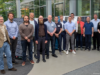
How can anion exchange membrane water electrolysis be advanced from individual components toward a robust and scalable stack concept? This question is at the core of the HyInnoAEM project and also shaped the consortium’s fourth project meeting, hosted by FEV…
From Water Quality to Cell Integrity: A Comprehensive PEM Stack Forensics Study
An industrial customer sought an independent second opinion on purchased and stored PEM electrolyzer stacks prior to installation in its electrolysis systems...
Copper end‑of‑life recovery pathways in data center infrastructure
Data center growth creates large volumes of end‑of‑life copper FEV was asked to analyze recycling pathways to identify levers to improve copper preservation and circularity…
FEV supports BESS investment decisions through BESS Redflag Report and asset simulation
The challenge Investors and asset owners need to understand both the current condition and the future potential of operating battery energy storage systems. The challenge is to identify technical risks, assess remaining useful life, and evaluate…
Whitepaper: Industrial symbiosis – A catalyst for sustainable special economic zone development in MENA
Special Economic Zones (SEZs) and industrial parks are entering a new phase of development. For decades, zones competed primarily on cost, infrastructure access, and fiscal incentives. Today, investment decisions are increasingly shaped by sustainability performance, resource efficiency, resilience, and ESG…
Project HollowEL started: Advancing next-gen bubble-free PEM electrolysis towards industrial application
Green hydrogen production relies on electrolysis technologies that combine high efficiency, durability, scalability, and cost-effective manufacturing. However, conventional electrolyzer cells still suffer from performance losses caused by gas bubble formation at the electrode surfaces, which impairs mass transport and increases…
From hardware-centric to Software-Defined Electrolyzers
Why control systems are becoming a competitive differentiator At the Aachen Hydrogen Colloquium 2026, FEV experts explored how software-defined control architectures can help electrolyzer systems operate more efficiently, flexibly, and intelligently within increasingly dynamic energy systems. Why control systems are…
Key takeaways from Electric Mine 2026 in Lisbon
More than 750 delegates from 35 countries gathered in Lisbon for Electric Mine 2026, the world’s only conference dedicated entirely to mine electrification. The event brought together mining companies, equipment manufacturers, technology providers, and energy experts to discuss one of…
DeCarTrans milestone: Converting eMethanol into market-ready eFuels at industrial scale
The transition to sustainable mobility will require multiple pathways to decarbonize transport. While electrification continues to grow, renewable fuels remain an important option for applications where existing vehicle fleets and infrastructure are expected to play a long-term role. A significant…