Whitepaper: Industrial symbiosis – A catalyst for sustainable special economic zone development in MENA
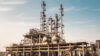
Special Economic Zones (SEZs) and industrial parks are entering a new phase of development. For decades, zones competed primarily on cost, infrastructure access, and fiscal incentives. Today, investment decisions are increasingly shaped by sustainability performance, resource efficiency, resilience, and ESG alignment.
A new whitepaper by FEV energy+resources and NurZen explores how Industrial Symbiosis can help Special Economic Zones and industrial parks evolve into future proof ecosystems, transforming conventional industrial parks into globally competitive, ESG-compliant Eco-Industrial Parks (EIPs) aligned with UNIDO’s EIP Framework.
What’s inside ?
Built for SEZ authorities, zone developers, investment directors, sustainability managers, and ESG advisors across the UAE, Saudi Arabia, Qatar, Morocco, Oman, Egypt, and Bahrain, the whitepaper provides:
- Global benchmarking analysis of >10 leading industrial symbiosis ecosystems
- Techno-economic model applicable to representative MENA industrial parks
- Implementation roadmap covering policy, finance, and capacity-building
- Sector-specific insights on waste heat recovery, green H2 & carbon capture tech
What is industrial symbiosis?
Industrial Symbiosis describes the exchange of energy, materials, water, and by-products between co-located industries, so that one facility’s residual stream becomes another’s resource. Instead of each company managing emissions, water use, and by-products in isolation, this approach connects companies through shared resource flows, infrastructure and enabling technologies (e.g., photovoltaics, battery storage, heat pumps, electrolyzer, thermal storage or gasification)
This is the operating model behind some of the world’s most studied industrial ecosystems, including Kalundborg (Denmark), Ulsan (South Korea), Rotterdam (Netherlands), and Kwinana (Australia).
Key findings from the whitepaper
The whitepaper’s techno-economic model quantifies what full Industrial Symbiosis and technology integration can deliver for a representative industrial park:
- 0 Mt CO₂per year - in emissions reduction potential
- 0 bn€per year (up to) - in OPEX savings potential
- 0 yrpayback (earliest) - Return on CAPEX
These figures are drawn from techno-economic modeling benchmarked against eleven leading industrial symbiosis ecosystems worldwide.
Why this matters for SEZs in MENA
ESG-aligned criteria have become a baseline expectation for attracting foreign capital and green finance across the Gulf and North Africa. This is especially relevant for energy-intensive sectors such as refining, petrochemicals, cement, steelmaking, logistics, and utilities, where heat recovery, shared infrastructure, and carbon management create real opportunities for Industrial Symbiosis. Beyond emissions, the approach also strengthens resilience against commodity price volatility, geopolitical disruption, and climate-related supply risks.
Explore the full techno-economic model, global benchmarks, and implementation roadmap for building ESG-compliant, globally competitive Eco-Industrial Parks:
In connection:From Feasibility to Reality : Chiyoda and FEV’s
Joint Pathway to Sustainable Hydrogen
CarriersFrom feasibility to reality: Chiyoda and FEV’s joint pathway to sustainable hydrogen carriersInterested in industrial symbiosis for your industrial park or Special Economic Zone?

Kyra Johnen-Thier
Solution Leader Municipal Ecosystems
FEV Consulting
Connect with Kyra via LinkedIn or use our contact form!
Similar posts
From hardware-centric to Software-Defined Electrolyzers
Why control systems are becoming a competitive differentiator At the Aachen Hydrogen Colloquium 2026, FEV experts explored how software-defined control architectures can help electrolyzer systems operate more efficiently, flexibly, and intelligently within increasingly dynamic energy systems. Why control systems are…
FEV and Regout Group Collaborate on Smart Energy Management through PV–BESS Integration
The Regout Group, a leading industrial manufacturer in Maastricht, aims to enhance sustainability and reduce energy costs. With rising electricity prices and the need for greener operations, the challenge was to identify an optimal mix of renewable energy generation and…
Onboard Carbon Capture: Reducing emissions from existing vessel fleets
The maritime industry is entering a decisive decade. With tightening regulations from the International Maritime Organization (IMO) and ambitious net-zero targets for 2050, shipping companies face increasing pressure to reduce greenhouse gas emissions while maintaining operational efficiency and commercial competitiveness.