Onboard Carbon Capture: Reducing emissions from existing vessel fleets
The maritime industry is entering a decisive decade. With tightening regulations from the International Maritime Organization (IMO) and ambitious net-zero targets for 2050, shipping companies face increasing pressure to reduce greenhouse gas emissions while maintaining operational efficiency and commercial competitiveness.
While alternative fuels continue to attract significant attention, another pathway is gaining momentum: Onboard Carbon Capture (OCC).
For many vessel operators, OCC offers a practical approach to reducing emissions from existing fleets without requiring a complete transition to new propulsion systems or fuel infrastructures.
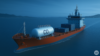
Why interest in OCC is growing
Decarbonizing shipping remains a complex challenge.
Many vessels operating today are expected to remain in service for decades. At the same time, uncertainty around fuel availability, infrastructure development, and future market requirements makes investment decisions increasingly difficult.
As a result, shipping companies are looking for solutions that can deliver emissions reductions while preserving operational flexibility.
This is where onboard carbon capture is attracting growing interest.
By capturing carbon dioxide directly from a vessel’s exhaust system, OCC can support compliance with future emissions requirements while extending the value of existing assets.
Rather than replacing vessels, operators can explore retrofit strategies that reduce emissions and support decarbonization objectives within existing fleets.
Moving beyond compliance
The market discussion around OCC is evolving.
Initially, onboard carbon capture was primarily viewed as a response to tightening emissions regulations. Today, companies are increasingly evaluating the technology through a broader strategic lens.
Questions now include:
- What is the long-term market potential for onboard carbon capture?
- Which vessel segments offer the strongest business case?
- How can captured carbon be integrated into emerging carbon value chains?
- What cost reductions are required for large-scale deployment?
- How can operational efficiency be maintained onboard?
These considerations demonstrate that OCC is becoming more than a compliance tool. It is increasingly being assessed as part of wider decarbonization and business strategies.
Opportunities across the maritime value chain
The emergence of onboard carbon capture also creates opportunities beyond ship operators.
System suppliers, component manufacturers, engineering companies, and carbon management providers may all benefit from the development of a new maritime carbon capture ecosystem.
Potential opportunities include:
- Retrofit solutions for existing fleets
- Carbon capture system integration
- CO₂ handling and storage technologies
- Digital monitoring and optimization solutions
- Connections to carbon utilization and carbon management markets
As the market evolves, companies already active in adjacent technologies may be able to leverage existing capabilities and product portfolios to support OCC deployment.
The importance of system optimization
While the concept of capturing carbon onboard appears straightforward, successful implementation requires careful system integration.
Operators must balance factors such as:
- Space and weight constraints
- Energy consumption
- Capture efficiency
- Operating costs
- Vessel performance
- CO₂ storage and handling requirements
For this reason, reducing system costs and optimizing operational performance remain critical priorities for future deployment.
Organizations evaluating OCC opportunities increasingly require a holistic understanding of technology, economics, regulations, and operational impacts.
Learn more about our carbon solutions!
Looking ahead
The maritime sector faces one of the most challenging decarbonization journeys of any industry.
While no single solution is likely to address every application, onboard carbon capture is emerging as a promising option for reducing emissions from existing fleets while supporting compliance with future regulatory requirements.
As technologies mature and market frameworks develop, OCC may become an increasingly important element of maritime decarbonization strategies.
For ship operators, suppliers, and investors alike, the question is no longer whether onboard carbon capture deserves attention.
The question is where it creates the greatest value and how organizations can position themselves to benefit from its growing role in the future maritime landscape.
In connection:Get in contact with us

Dr. Daniel Neumann
Head of Strategy
FEV Consulting
Connect with Daniel via LinkedIn or use our contact form!

David Fischer
Solution Leader Carbon Solutions
energy + resources
Connect with David via LinkedIn or use our contact form!
Similar posts
Whitepaper: Industrial symbiosis – A catalyst for sustainable special economic zone development in MENA
Special Economic Zones (SEZs) and industrial parks are entering a new phase of development. For decades, zones competed primarily on cost, infrastructure access, and fiscal incentives. Today, investment decisions are increasingly shaped by sustainability performance, resource efficiency, resilience, and ESG…
From hardware-centric to Software-Defined Electrolyzers
Why control systems are becoming a competitive differentiator At the Aachen Hydrogen Colloquium 2026, FEV experts explored how software-defined control architectures can help electrolyzer systems operate more efficiently, flexibly, and intelligently within increasingly dynamic energy systems. Why control systems are…