Select another language to see content for your location.

Degradation &
multiphysics modeling

Electrolyzer performance does not remain constant throughout its lifetime. Understanding how and why it changes is key to improving durability, efficiency, and hydrogen production costs.

Discuss your modeling requirements


Electrolyzer Degradation & Lifetime Prediction: Predict degradation. Assess remaining useful life. Optimize operation.

Electrolyzer performance evolves throughout operation. Materials age, electrochemical properties change, and local operating conditions influence the rate and nature of degradation. Considering these effects early in the planning of an Electrolyzer plant is key to reliably predict levelized cost of hydrogen (LCOH) over time.

FEV combines physical-empirical degradation modeling with advanced segmented multiphysics simulation to understand these interactions and predict performance evolution across major low- and high-temperature electrolysis technologies, including PEM water electrolysis (PEMEL), anion exchange membrane water electrolysis (AEMEL), alkaline water electrolysis (AEL), and solid oxide electrolysis (SOEL / SOEC).

Our modular modeling frameworks connect operating conditions, material and design parameters, local electrochemical behavior, and individual aging mechanisms. This enables development questions to be addressed across different spatial and temporal scales, from local processes within individual cell layers to lifetime-relevant performance evolution.
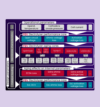

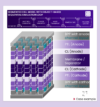
From local cell physics to time-resolved performance and lifetime prediction.

Model Electrolyzer Lifetime: Understand performance degradation

Lifetime is a key factor for the technical and economic performance of electrolyzers.

Rather than representing aging solely through an averaged degradation rate, FEV uses a modular physical-empirical approach that links individual degradation mechanisms to changes in physical and electrochemical cell properties and, ultimately, to measurable performance.

The framework is designed to address technology-specific aging behavior across PEMEL, AEMEL, AEL, and SOEL / SOEC, while allowing the underlying methodology to be adapted as additional mechanisms, materials, and electrolysis technologies are investigated.

  • Material, Design & Operating Conditions

    Temperature, pressure, current density, load profile, material properties, membrane or separator characteristics, catalyst loading, and other design parameters define the operating environment.

  • Begin-of-Life Performance

    Electrochemical performance models describe the initial state of the electrolyzer.

  • Aging & Degradation Mechanisms

    Dedicated submodels describe the evolution of relevant degradation effects over time.

  • Changes in Material & Cell Properties

    Aging influences parameters such as electrochemically active surface area, ionic and electrical resistance, catalytic activity, and transport characteristics.

  • Time-Resolved Performance

    The resulting effects on cell voltage, efficiency, and overall performance are calculated throughout the operating period.

Modular Physical-Empirical Degradation Modeling: Separate aging mechanisms & quantify contribution

FEV’s modeling architecture separates the fundamental electrolyzer performance model from dedicated aging cores. This modular structure enables degradation mechanisms to be represented individually and subsequently combined according to the investigated technology, material system, available experimental data, and development objective.

Depending on the electrolysis technology, dedicated models can address effects associated with:

    • Catalyst aging and loss of electrochemically active surface area
    • Membrane or separator degradation
    • Increasing ionic or electrical resistance
    • Bipolar plate and interface aging
    • Contamination and poisoning
    • Reversible performance changes
    • Break-in behavior
    • Transport-related aging effects
    • Additional technology-specific degradation mechanisms

The resulting framework creates an Electrolyzer Degradation Library in which technology-specific aging cores can be combined with a common performance-model architecture.

ELECTROLYZER TECHNOLOGIES :Technology-specific modeling

The exact mechanisms represented depend on the application and available validation data.

Proton Exchange Membrane Electrolysis (PEMEL)

Membrane, catalyst, interface, transport, contamination, and reversible aging phenomena.

Patent Application DE102025115470A1

Model for determining degradation of a polymer membrane electrolysis cell.

The methodology establishes a framework in which operating and design parameters influence an initial electrochemical performance model, while dedicated aging functions modify internal model parameters over time.
This creates a direct modeling chain as explained above. The modular concept supports the development of interpretable degradation models that can be parameterized using experimental aging data.

FEV-developed degradation modeling methodology, supported by patent application DE102025115470A1.


From Testing to Lifetime Prediction: From selective aging data to predictive models

Degradation modeling and experimental testing are closely connected. FEV combines targeted test definition, data analysis, aging-model development, parameterization, validation, and lifetime simulation within a consistent methodology.

Relevant degradation conditions and operating parameters are identified to create an efficient and application-oriented experimental test matrix.
Testing strategies can include:
  • Calendar aging
  • Cyclic aging
  • Current and voltage cycling
  • Start-stop operation
  • Dynamic operating profiles
  • Accelerated stress conditions
  • Technology-specific degradation tests
  • Customer-specific duty cycles
Experimental data is subsequently processed for model development, parameter identification, and validation.

Measured performance evolution is translated into mathematical descriptions of individual aging mechanisms.
The model can distinguish between the effects of different operating conditions and quantify their contribution to overall degradation.

Following calibration and validation within the relevant operating domain, the model can be applied to investigate application-specific operating scenarios beyond the duration of the original test campaign.
Potential applications include comparison of:
  • Operating strategies
  • Dynamic load profiles
  • Current-density limits
  • Temperature strategies
  • Pressure levels
  • Material and design variants
  • Renewable energy profiles
  • Customer-specific duty cycles
Use testing to characterize degradation. Use simulation to explore lifetime.

Accelerated Testing & Model-Based Test Design:Focus experimental effort on relevant aging conditions

Electrolyzer durability testing can require extensive operating time and laboratory resources.

Model-based development can support the identification of degradation-relevant operating conditions and help focus experimental campaigns on test points with high information value.

A combined testing and simulation methodology can support:
  • Identification of relevant aging drivers
  • Definition of reduced test matrices
  • Development of accelerated aging strategies
  • Selection of diagnostic checkpoints
  • Parameterization of degradation models
  • Model validation
  • Translation toward application-specific lifetime scenarios
The objective is to connect accelerated testing, physical understanding, and lifetime simulation within one development methodology.

Electrolyzer modeling:Segmented multiphysics cell modeling

Move beyond average cell values

Global quantities such as average cell voltage, temperature, and current density provide limited information about local electrochemical conditions. FEV uses spatially segmented electrochemical cell models to calculate local state variables across the active area and throughout the individual functional layers of an electrolyzer.

Depending on the technology, the model architecture can represent:
  • Bipolar plates and flow-field structures
  • Porous transport or transport layers
  • Electrodes and catalyst layers
  • Membranes, diaphragms, separators, or solid electrolytes
  • Anode and cathode domains
  • Local fluid and gas transport
The framework can therefore be adapted to the different architectures of PEMEL, AEMEL, AEL, and SOEL / SOEC.

Coupled Electrochemical & Multiphysics Simulation
:Resolve interacting processes within the electrolyzer cell

Electrolyzer performance results from several strongly coupled physical processes.
FEV’s segmented modeling framework can combine:

Electrochemistry

Local reaction kinetics, overpotentials, and current generation.

This enables spatial distributions and local state variables to be evaluated rather than relying solely on cell-average quantities.

Typical simulation outputs can include:
  • Local current-density distribution
  • Local voltage losses
  • Temperature distribution
  • Species and water distribution
  • Gas production
  • Gas crossover
  • Two-phase behavior
  • Local membrane or separator conditions
  • Transport limitations
  • Local operating conditions relevant to aging

Patent Application DE102026104052A1

Method for determining local state variables of an electrochemical cell and system comprising an electrochemical cell

The underlying modeling methodology enables spatial subdivision of the electrochemical cell and coupling of relevant physical domains within a sequential simulation framework.

This provides a scalable approach for detailed electrochemical representation while maintaining computational efficiency for larger discretizations and potential stack-level applications.

FEV-developed segmented electrochemical simulation methodology, supported by patent application DE102026104052A1.

From Models to Engineering DecisionS:Turn physics into actions

FEV uses degradation and multiphysics models to support decisions throughout electrolyzer development.
  • Material & Components

    Investigate how material properties influence electrochemical performance and aging.

  • Cell Design

    Analyze local transport, electrochemistry, thermal conditions, and potential performance limitations.

  • Operating Window

    Assess the interaction between performance, efficiency, and degradation.

  • Durability

    Identify degradation-relevant conditions and support targeted aging-test strategies.

  • Operating Strategy

    Compare alternative duty cycles and operating strategies regarding their influence on long-term performance.

  • Lifetime Prediction

    Evaluate time-resolved performance for application-specific load profiles within the validated model domain.

FEV-DEVELOPED METHODOLOGY
:Predictive electrolyzer development

FEV combines electrochemistry, degradation modeling, segmented multiphysics simulation, testing, and system engineering across major electrolysis technologies, from PEMEL, AEMEL, and AEL to SOEL / SOEC.

Supported by dedicated FEV-developed methodologies for both degradation prediction and spatially resolved electrochemical modeling, this approach enables electrolyzer behavior to be investigated across space and time.

Whether the objective is to understand an aging mechanism, optimize materials and cell architecture, define an accelerated test strategy, investigate local operating conditions, or predict performance under a future duty cycle, the objective remains the same.

FAQ about degradation & modeling

Degradation modeling describes how relevant material, physical, and electrochemical properties change over time and how these changes influence measurable electrolyzer performance.

Physical-empirical approaches combine physically interpretable model structures with parameters derived from experimental data. This enables mechanistic insight while maintaining computational efficiency for long-term and use-case simulations.

FEV’s modeling landscape addresses major low- and high-temperature electrolysis technologies, including PEM water electrolysis, anion exchange membrane water electrolysis, alkaline water electrolysis, and solid oxide electrolysis.
Technology-specific equations, material properties, degradation mechanisms, and validation data are applied according to the respective application.

Yes. A modular modeling architecture enables individual aging mechanisms to be represented separately and subsequently combined to evaluate their contribution to overall performance degradation.

Depending on the technology and available data, relevant mechanisms can include catalyst aging, membrane or separator degradation, increased ohmic losses, bipolar plate aging, poisoning, reversible effects, break-in behavior, transport-related effects, and additional technology-specific degradation mechanisms.

Potentially yes. Suitability depends on data quality, test duration, operating conditions, measurement resolution, and whether the relevant degradation mechanisms are sufficiently represented.

Simulation can support test-matrix definition and help identify informative operating conditions. Validated models can subsequently be used to investigate additional operating scenarios. The achievable reduction in experimental effort depends on model validity, application domain, and required prediction confidence.

Segmented modeling spatially discretizes an electrolyzer cell and calculates local electrochemical and physical state variables such as current density, temperature, species transport, pressure, and flow.

Multiphysics models can identify local operating conditions that act as degradation drivers. Degradation models can subsequently describe how these conditions influence material properties and electrochemical performance over time.
This links local cell physics with long-term performance evolution.

Model outputs are compared with representative experimental data across the intended operating domain. The validation strategy depends on model architecture, available measurements, electrolysis technology, and targeted application.

FEV combines modular degradation modeling with spatially segmented electrochemical and multiphysics simulation.
The development is supported by two dedicated patent applications:
DE102025115470A1
Model for determining degradation of a polymer membrane electrolysis cell
DE102026104052A1
Method for determining local state variables of an electrochemical cell and system comprising an electrochemical cell
Together, these approaches support the connection of operating conditions, local cell states, aging mechanisms, and time-resolved performance prediction within an integrated simulation methodology.

Start a technical discussion: Discuss your modeling challenge

Explore how degradation models can support lifetime assessment, material selection, cell design, testing, or operating-strategy development.